
I am not really sure exactly why, but a week or two ago, I woke in the middle of the night and my mind went to Jochebed. The following morning, rather than continuing on with my reading plan, I decided to look up the story of Jochebed. I was surprised to see how little is recorded of her story. We know she was from the tribe of Levi, married to a man named Amram and she had other children besides Moses; Aaron and Miriam. This lady Jochebed raised some very influencial people. Her Hebrew name means, “Yahweh is glory” or “God is glory.”
Moses of course was a great leader, not a perfect leader by any means, as he had many weaknesses and made his fair share of mistakes. But God very obviously had a plan and purpose for his life and in the lives of the Children of Israel. Interestingly, there are only ten verses about Jochebed’s motherhood journey and yet their parenting role is recognised in Hebrews chapter 11:23 among the list of the great hereos of faith in the Bible.
By faith Moses, when he was born, was hid three months by his parents, because they saw he was a proper child; and they were not afraid of the King’s commandment.
When Moses himself is recognised in Hebrews 11:27 for his own faith, the verbage used in this verse is very similar.
By faith he forsook Egypt, not fearing the wrath of the King: for he endured, as seeing him who is invisible.”
When the time came for him to live out his own challenges, like his parents before him, Moses responded to the plan and purpose of God and not out of fear of an earthly King. Looking at these two verses, we could certainly say, that Moses was greatly influenced by the role modeling and faithful example of his parents. A reminder to us as parents, that our words are important, as we teach and raise our children, but our daily example and life we live before them is passing on a story of our values and beliefs.
Knowing that Jochebed was listed in the chapter of faithful people in the Bible, made me all the more curious to pay attention to her story, even though found within only ten verses in Exodus 2:1-10. (I encourage you to read those verses for yourself.)
From the very beginning, we learn that Jochebed saw that Moses was a special baby. She may have known that God had a special plan for her baby’s life. She was a mother during a very challenging time for all Israelite parents. Pharaoh was wanting to get rid of every Hebrew baby boy as he was threatened by the strength and growing number of the Israelties. The first courageous action we read of Jochebed is that she hid the baby to protect him for the first three months of his life. From what we just read in Hebrew 11, we know that this was not from a place of fear, but from a response of her faith in God.
When she could no longer hide him (probably as he was getting older and his cries were getting louder) she got practical and creative. She did the next, right, courageous thing she knew to do and made a basket of reeds, water proofing it with tar and pitch. Then, she placed her precious baby in the Nile river, the very place where Pharoah was wanting to dispose of every male child. She had her daughter, Miriam, stay at a distance to see what would happen to Moses. Jochebed did not know what the outcome of her actions would be. She didn’t know if hiding him in a basket and placing him in a river was going to be a success in protecting him – but she still prepared the basket. I am sure she took great care, weaving the papyrus together and then covering it with the tar and pitch, as she then placed her baby gently inside and let him float away on the water. She had her part to play, which took courage and action, but also a great amount of trust and surrender to the plan of God.
Then we see, not just a constant thread of grace, but a display of God’s abundant grace (often experienced on the other side of full surrender) as the story plays out. What could have been a very bad thing, God uses for their good and His glory. The Princess sees the baby in the basket. He is crying and she has compassion on him, even knowing he is a Hebrew baby. Miriam, the quick thinking older sister, approaches and offers to go and get one of the Hebrew women to nurse the baby. She gets her own mother who is given such a beautiful gift to be the one to nurture and care for her own son, free from the fear of Pharaoh and with the approval of the Princess. She is even paid to be the one to care for the baby! Grace upon grace. How precious those years must have been for Jochebed as she sang over her special boy, told him stories and cared for him. These were the years that were to prepare him for the palace and the wilderness.

The last courageous and maybe most sacrificial act of Jochebed as a mother, is recorded in the last verse in the account of her story. It simply tells us that when the boy was older, his mother brought him back to Pharaoh’s daughter who adopted him as her own. She named him Moses, which means, “I lifted him out of the water.” Jochebed was faithful to return him to the palace when the time had come for the next season in his life. The time had come for her to let him go, not into the palace, but into all God had in store for him. In her journey as a mother she had faced many difficulies and God’s abundant grace. She hid him by faith, when it was the right thing to do. She prepared a basket and placed him in the water, when it was the right thing to do. All these actions of faith were preparing her for this moment when she had to walk him to the palace and surrender her rights as his mother, to a foreign princess who changed his name and took him as her own son. Jochebed let Moses go, to be able to fulfill God’s plans for his life. These were plans that she still did not know, but she trusted and believed in Jehovah who would always care and go with him.
I find it interesting to note the meaning of the name Moses, which was given to him by the Princess; “I lifted him out of the water.’ Even in a foreign place, with a different language spoken around him and much different teaching given to him, Moses’ name reminded him daily of the upbringing and act of faithful surrender of his parents. In Hebrews 11:24 it tells us the impact of those early years he spent with Jochebed and Amram.
By faith Moses, when he was come to years, refused to be called the son of Pharaoh’s daughter; chosing rather to suffer affliction with the people of God..
He knew to Whom he belonged and he chose instead to suffer with the people of God, rather than enjoy the pleasures and the privileges of the palace. As parents we have a great privilege and responsibility to pour into our children the truth of who they belong to and to live out lives that show honor and confidence in our great God, despite the challenges we may face in this world. Our God is trustworthy and we are to live in response to who He is and not in reaction alone to the circumstances around us. We do so, by faith, not knowing what God’s plans are for their lives, but trusting that God will go with them and before them in all they do and we can surrender with great peace to His will.
Moses had a courageous, faithful mother in all stages of his life. A mother who knew her place, within God’s greater story for her son’s life. She was faithful to protect, prepare and then present him back to the palace. Jochebed had very little control over Moses’ life (like all of us as parents) but she was faithful with the time and the opportunities God gave to her. She knew she was not entitled to them, but recieved them from the hand of her loving Jehovah.
Jochebed is a great example to me of active, courageous, surrender as a mother.
The opposite is fearful control, which can be a default in my own life, when I am not actively trusting the Lord. We have seen this in other mothers in Scripture, even though they knew that God had told them He had great plans and purposes for the future of their families.
Sarah, knew God had a plan, but she still tried to control the circumstances and when her faith wavered, she tried to control the outcome with her own plans and actions.
Rebekah, also knew God had a plan, but she still manipulated the actions of her son to decieve his father.

When faith in God and surrender to His will and are not our first love and desires as mothers, fear and control will often show in our thoughts and actions. There is no in-between. We either believe and take great hope and confidence in God’s sovereign love and grace, or we believe our own plans are better for our children and we will control and manipulate to get our own way.
The story of this dear lady Jochebed has challenged and encouraged me to chose faith and surrender in every season. To be faithful with the gift of the role God has entrusted to me today, but to never lose sight of my place within the plans and purposes of a trustworthy Heavenly Father in my children’s lives.
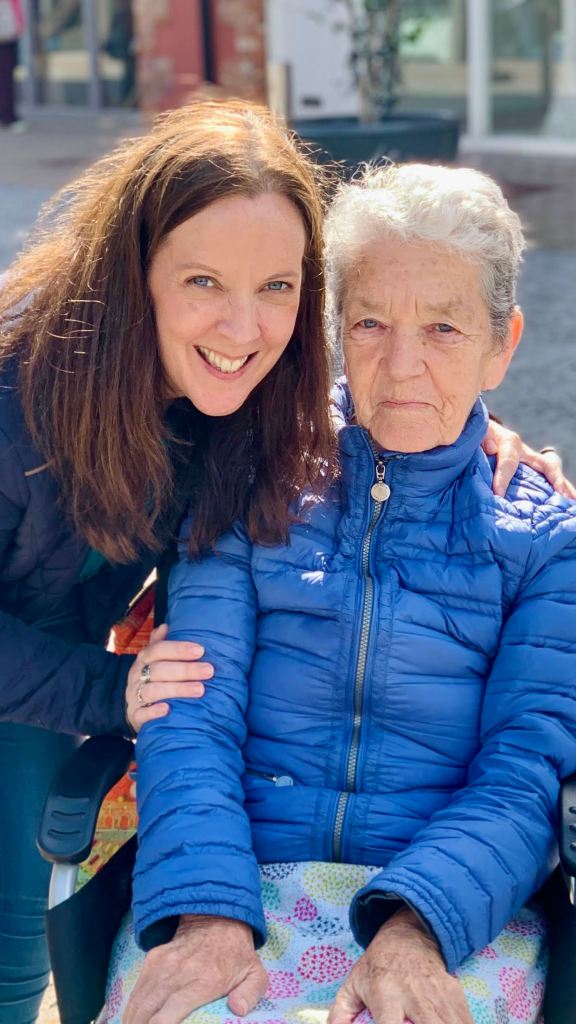
Jochebed’s story of motherhood is one of courageous surrender and God’s abundant grace. As I write I am reminded now why I woke in the middle of the night and thought of her – I had also been thinking of my own sweet mother. I have seen and known this courage and surrender up close and personal. My dear mother, facing her own challenges right now in a distant land, always knew her role as mother was to protect, nuture, prepare and let go in the seasons God gifted and ordained. She did not choose fear and control when I knew God was leading me, as a very inadequate and young nineteen year old, out to serve Him on the mission field. She chose surrender and faith, at much sacrifice to herself, so I could walk fully out into the plans God had for me. She continues to do so, even in this, or maybe especially in this season in life. I am forever grateful.
Thinking on the story of Jochebed and Moses leads me to ask these questions as I mother my own two children.
In what areas is the Lord entrusting me to be faithful in this season?
What is my next right action of obedience as a mother?
What actions can I take to protect, nuture and prepare my children in grace and truth, despite the challenges we may be facing?
Am I modeling a life that corresponds with the truth we are teaching?
In what areas do I need to surrender to the Lord, trusting His good and perfect will and letting my children go?
Is my life more defined by my role as a mother, or my life as a child of God?
In what areas do I see that I may be trying to control the situations in my child’s life out of fear and trying to manipulate or control?
How can I pray for my child/children in this season?
Happy Mother’s Day to each of you.
Love, Philippa.
 Teacups in the Jungle